Kwak Jisu,
Han Uido,
Kwon Sangrok
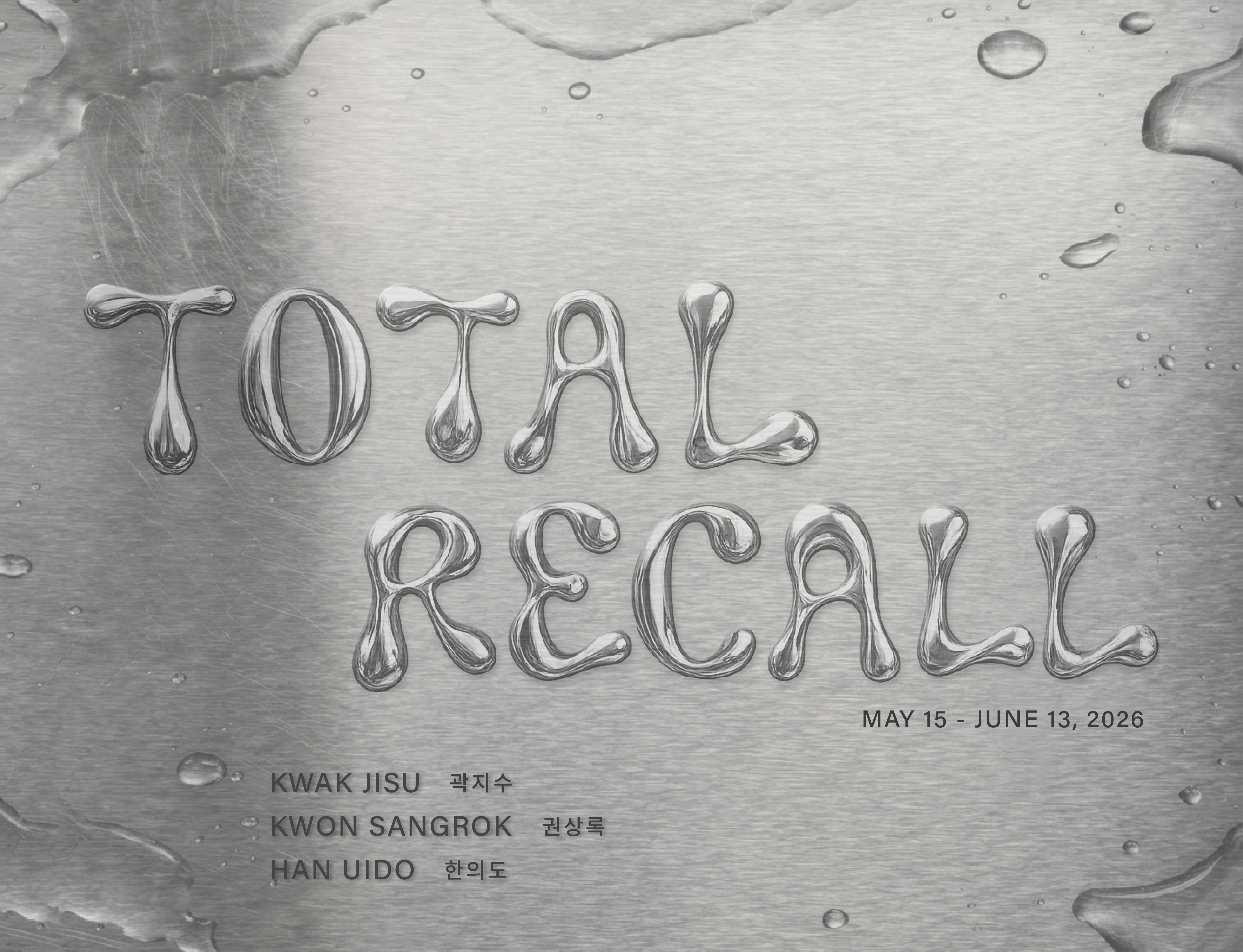
- TOTAL RECALL
May 15, 2026 - June 13, 2026
나의 정체성은 실재하는 감각인가, 설계된 데이터의 기록인가. 영화 <토탈 리콜 Total Recall>은 평범하게 살아가던 주인공이 이식된 기억과 파헤쳐진 실재 사이에서 겪는 정체성의 혼돈을 다룬다. 영화 속 주인공은 자신의 과거가 설계된 데이터에 불과할지도 모른다는 공포와 마주하며, 진정한 ‘나’의 기억을 찾기 위해 분투한다. 이러한 90년대 영화적 상상은 지그문트 바우만(Zygmunt Bauman)이 언급했던 ‘액체 사회(Liquid Modernity)’로서 유일하게 변하지 않는 것은 모든 것이 변한다는 사실 뿐인 오늘날을 살아가는 현대인의 정체성과 맞닿아 있다.
매체와 데이터가 실재를 압도하고, 끊임없이 부유하는 이미지들에 의해 자아가 끊임없이 재구조화되는 2026년 현재, 우리 개인은 모두 어느 정도 분열된 정체성을 안고 살아가는 영화 속 주인공의 초상이다. 이에 본 전시는 90년대에 영화적 상상으로 예견했던 2048년의 가상이 현재 어떤 방식으로 우리 곁에 물질화되어 있는지, 각자가 믿어온 정체성이 실은 얼마나 유동적이고 위태로운 이미지의 집합체인지 세 명의 작가가 제시하는 작품을 통해 추적해보고자 한다.
알고리즘과 인공지능을 통한 정보의 가공이 강력하게 영향을 미치는 사회에서는 더이상 내가 느끼는 감정, 기억, 가치관 등이 유기적으로 형성된 총체적 자아가 아니라 접속하는 플랫폼에 따라, 알고리즘이 보여주는 피드에 의해 끊임없이 편향된 정보들이 유입된다. 그리고 그 속을 떠도는 우리는 순간적인 자극과 반응 속에 존재한다. 다시 말해 일체화된 자아라는 것은 다시 모아 붙일 수 없는 ‘신화’가 되었다.
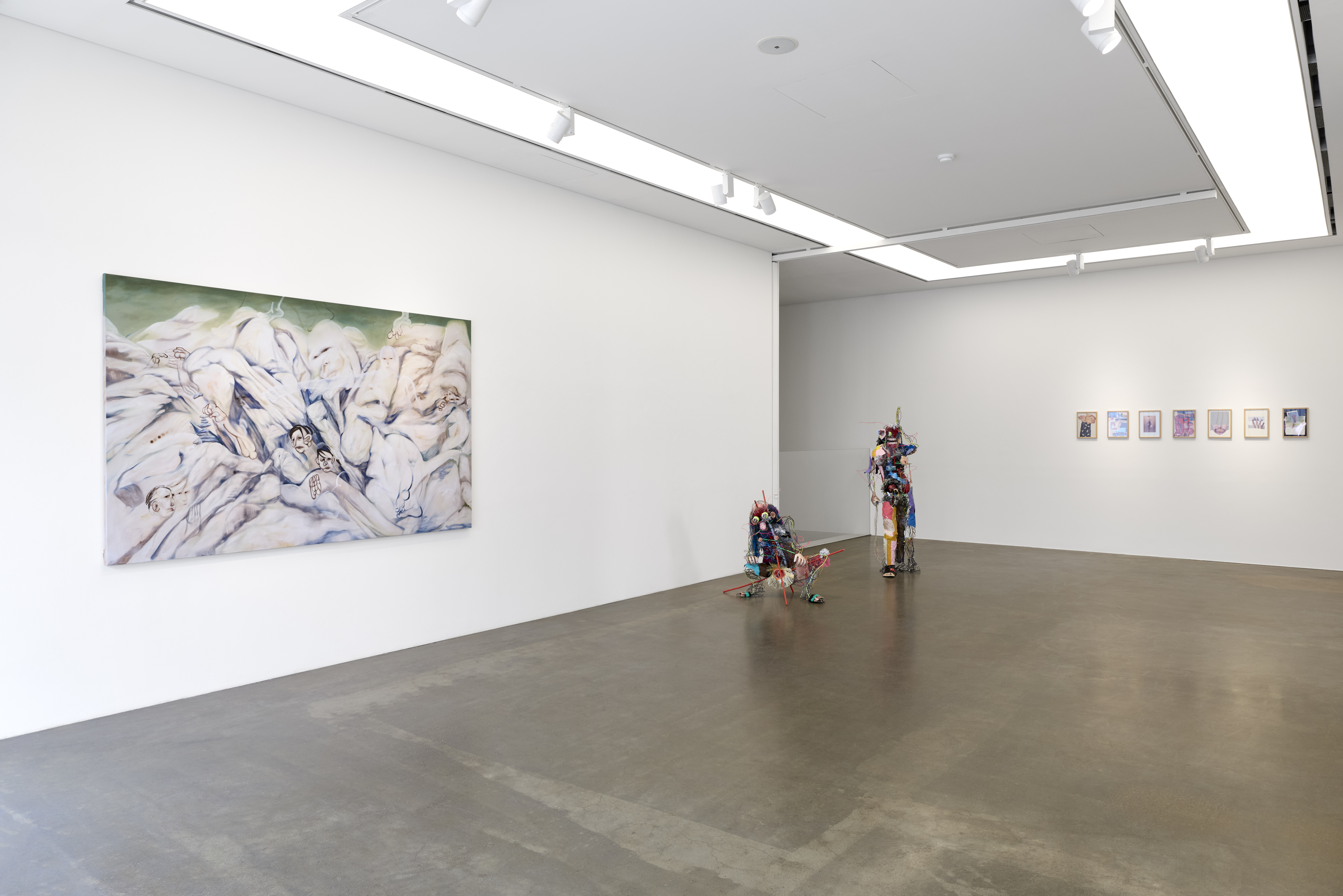
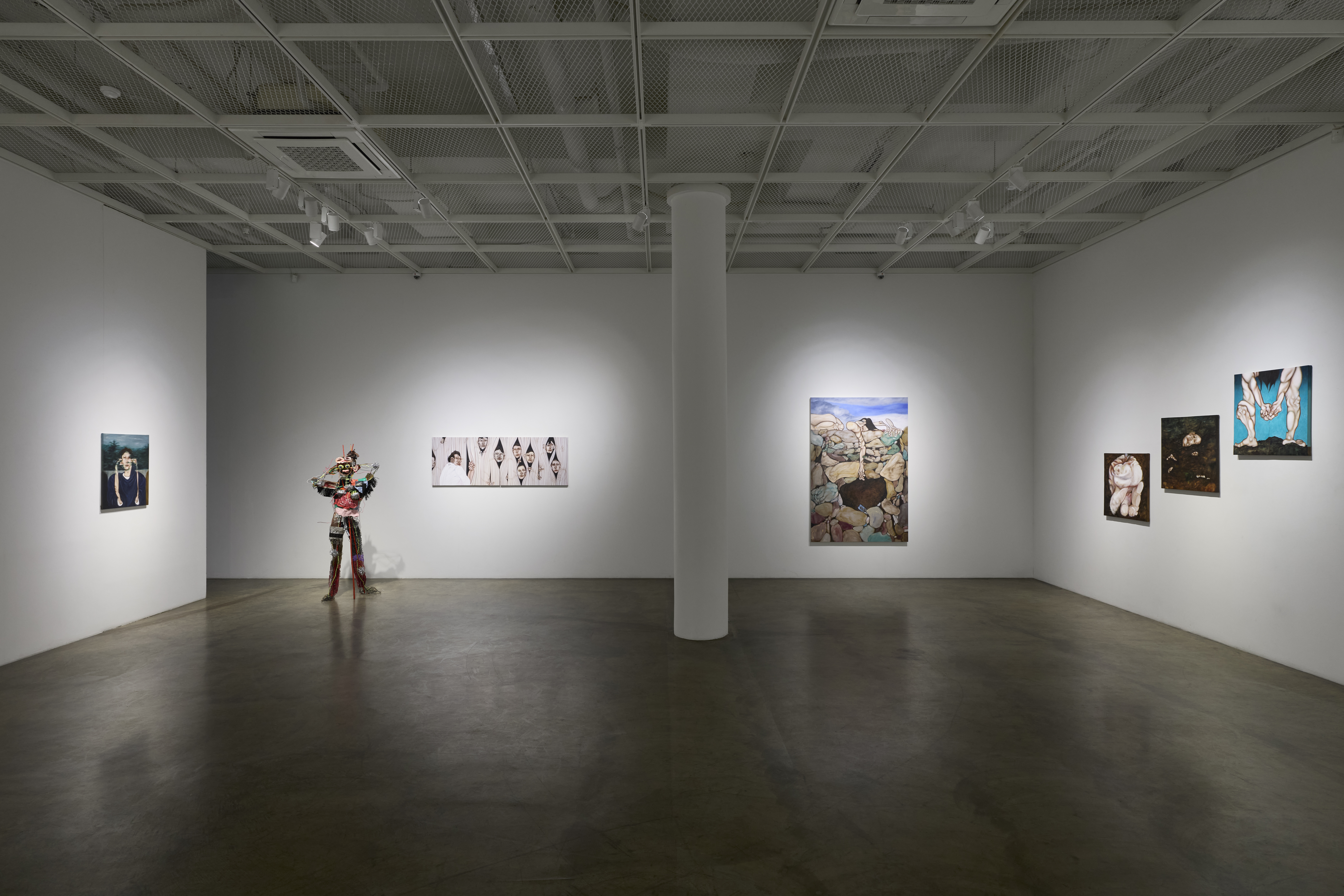
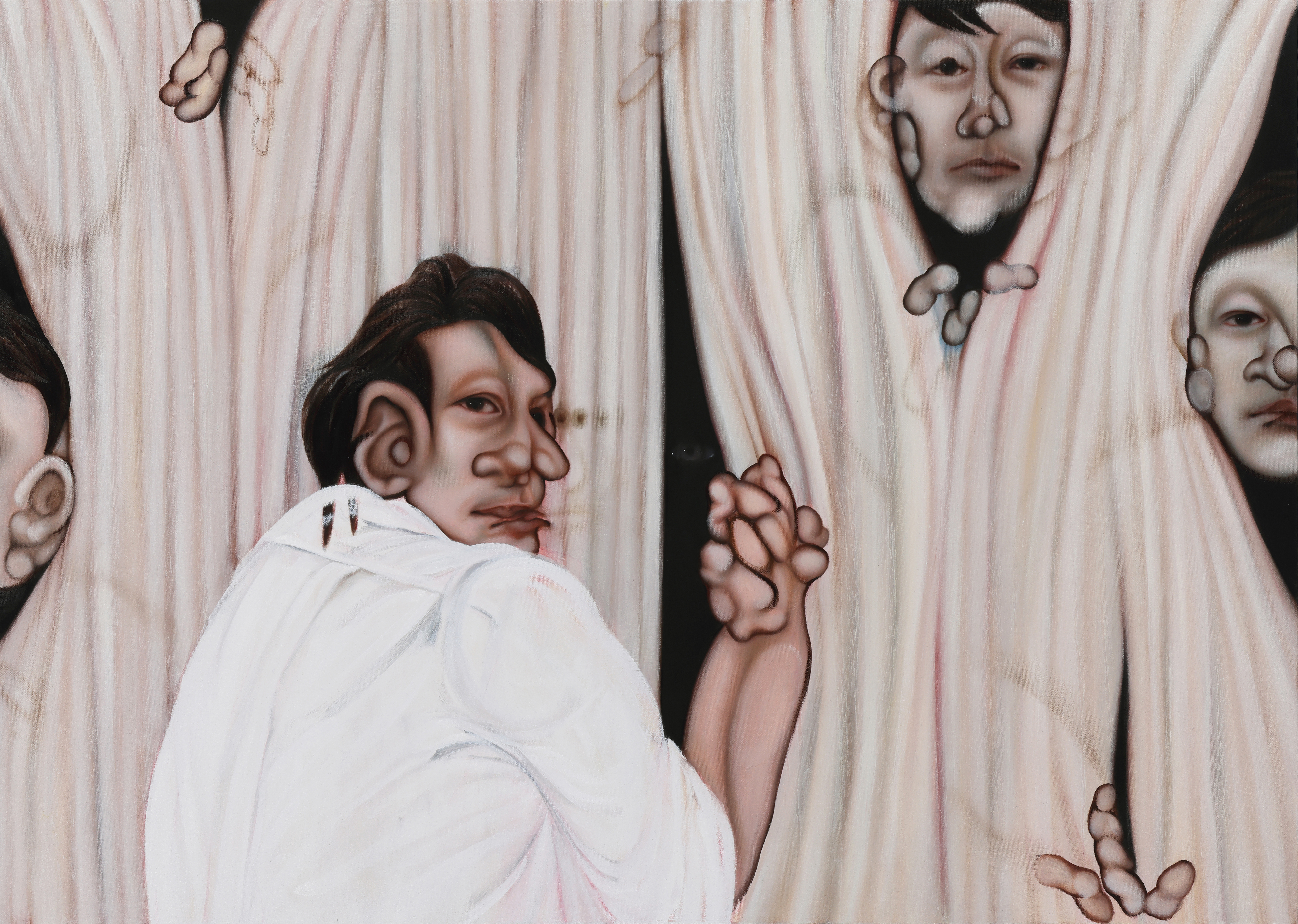
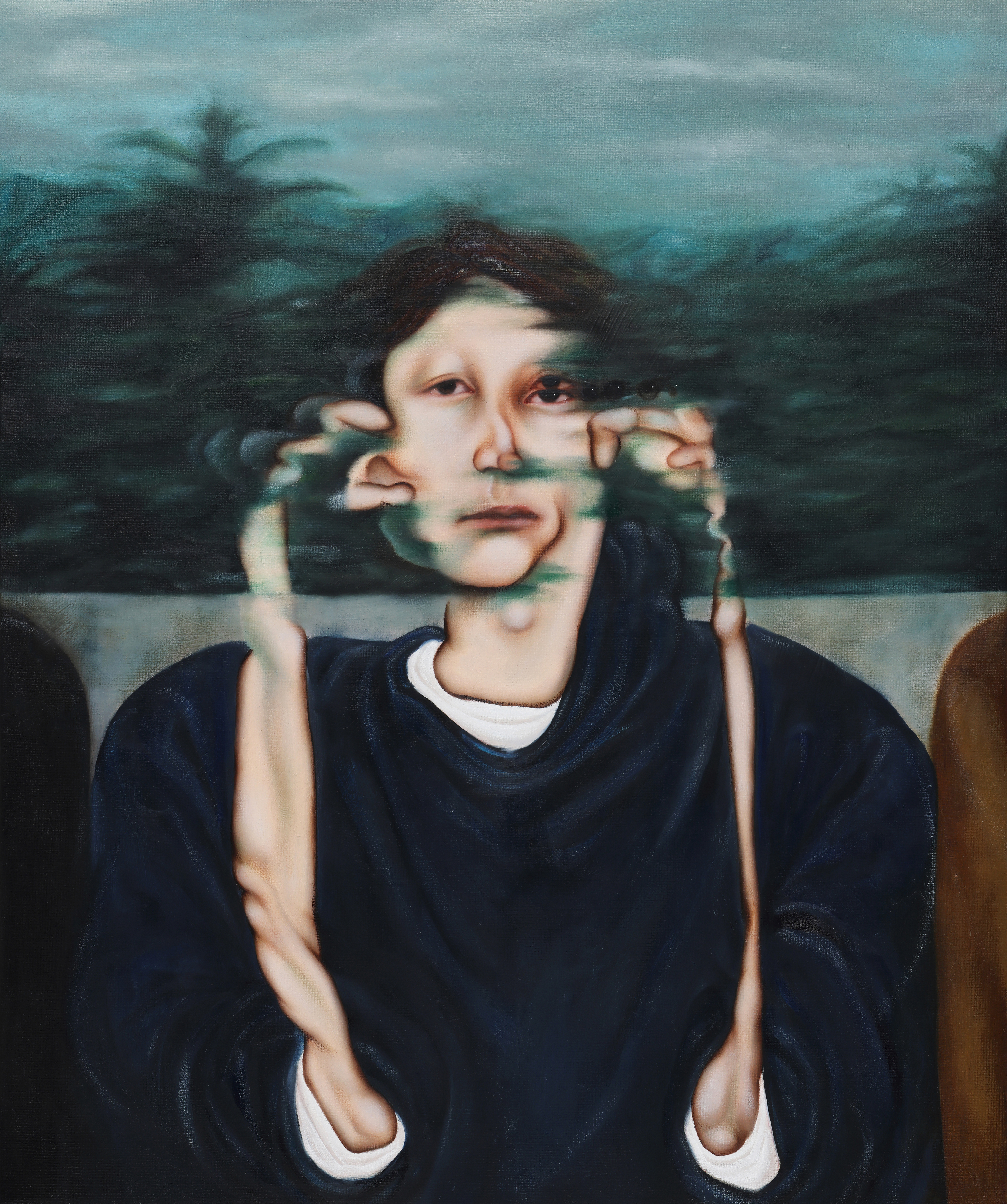
총체성에 대한 그 모든 희망을 접은 오늘날, 한의도(b.2003)는 늘어지고, 뒤틀린 인물의 형상을 통해 파편화된 정체성을 직유한다. 화면 위에서 반복되고 중첩되며 배경과의 경계가 모호해진 형상들은 디지털 사회가 인간에게 가하는 시각적 왜곡의 과정을 노골적으로 드러낸다. 이는 고정된 형태를 유지하지 못하고 부유하며 맥락을 상실한 채 쏟아지는 파편화된 정보와 도파민 중심의 시각 자료들이 우리 내면에 남긴 흔적과 같다.
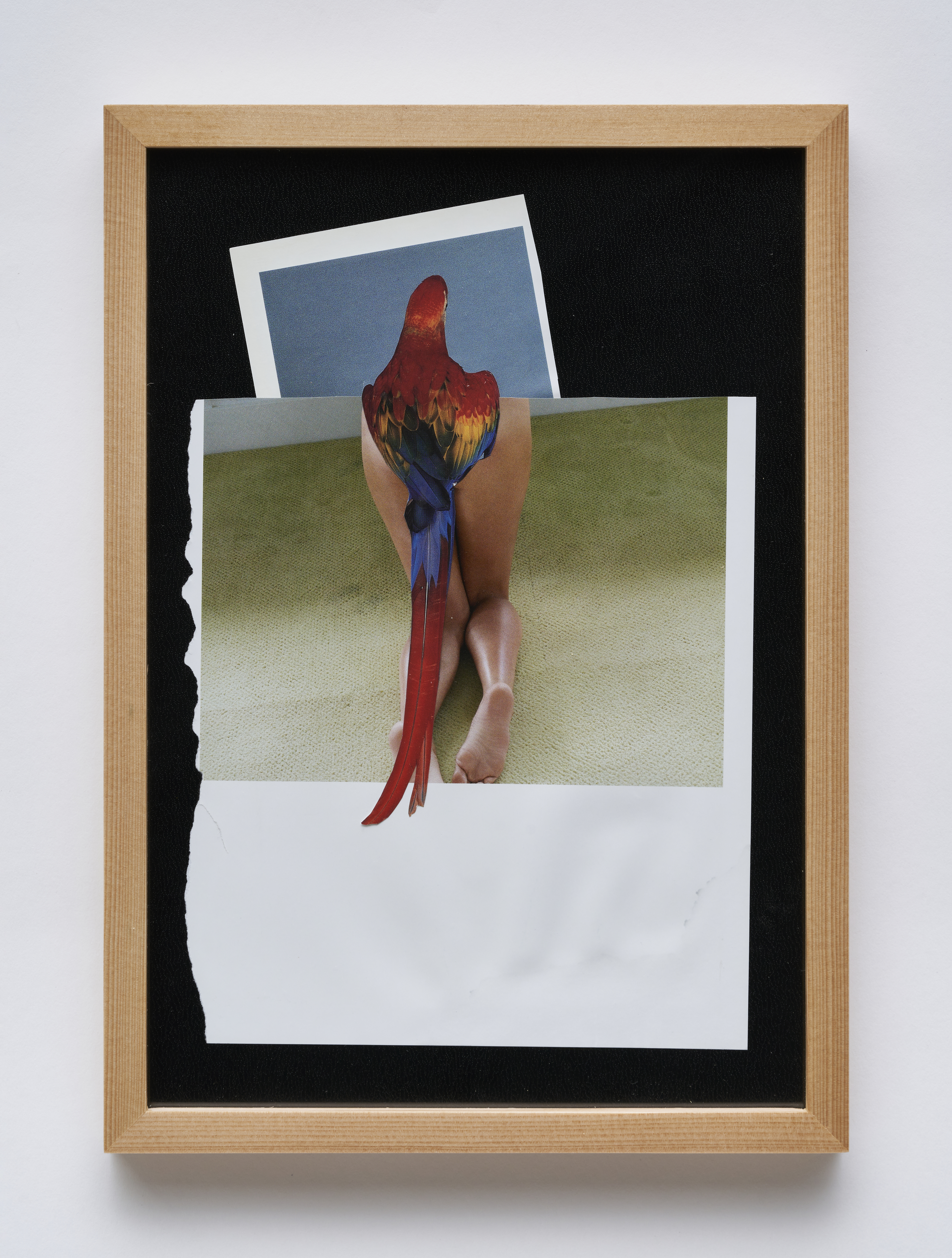
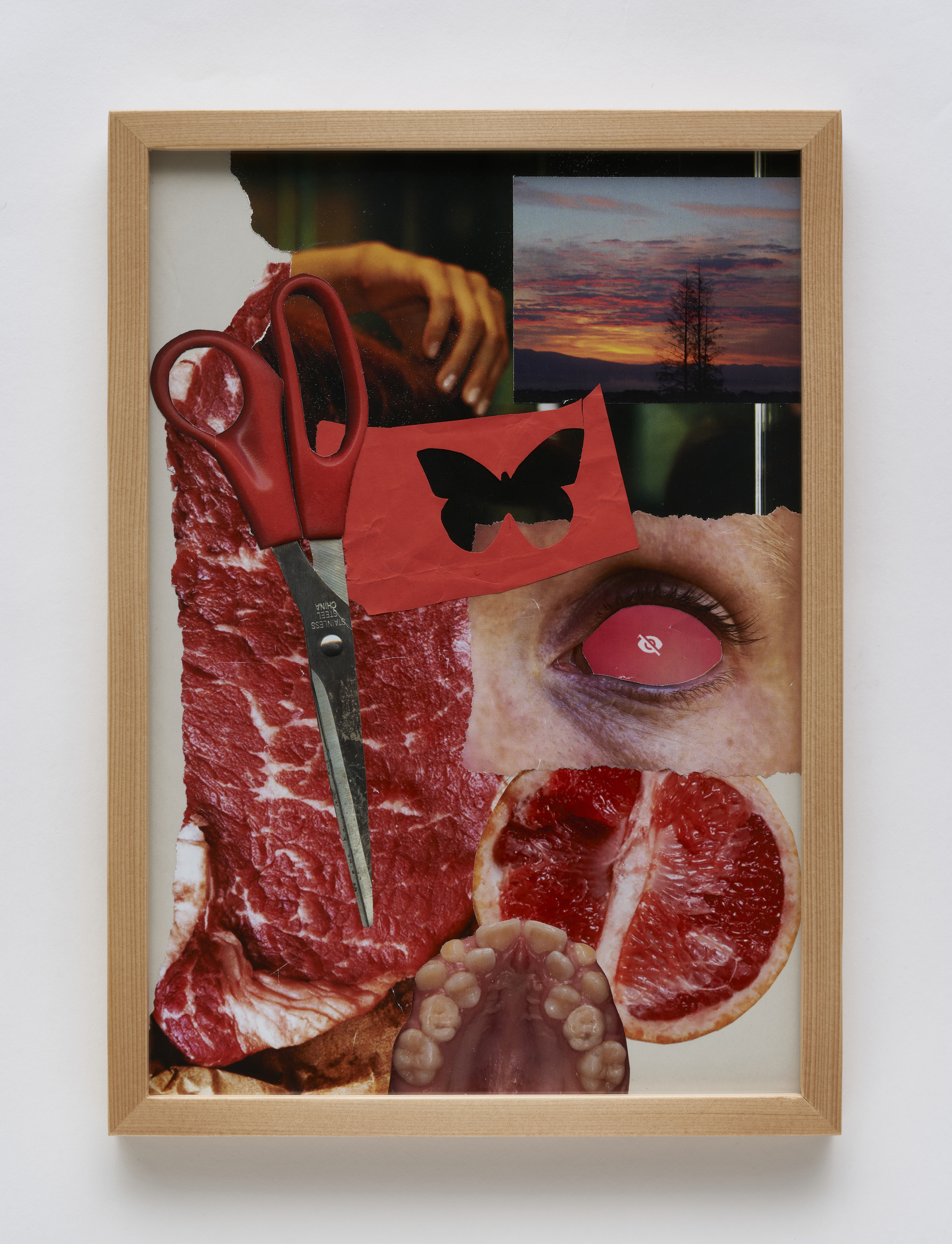
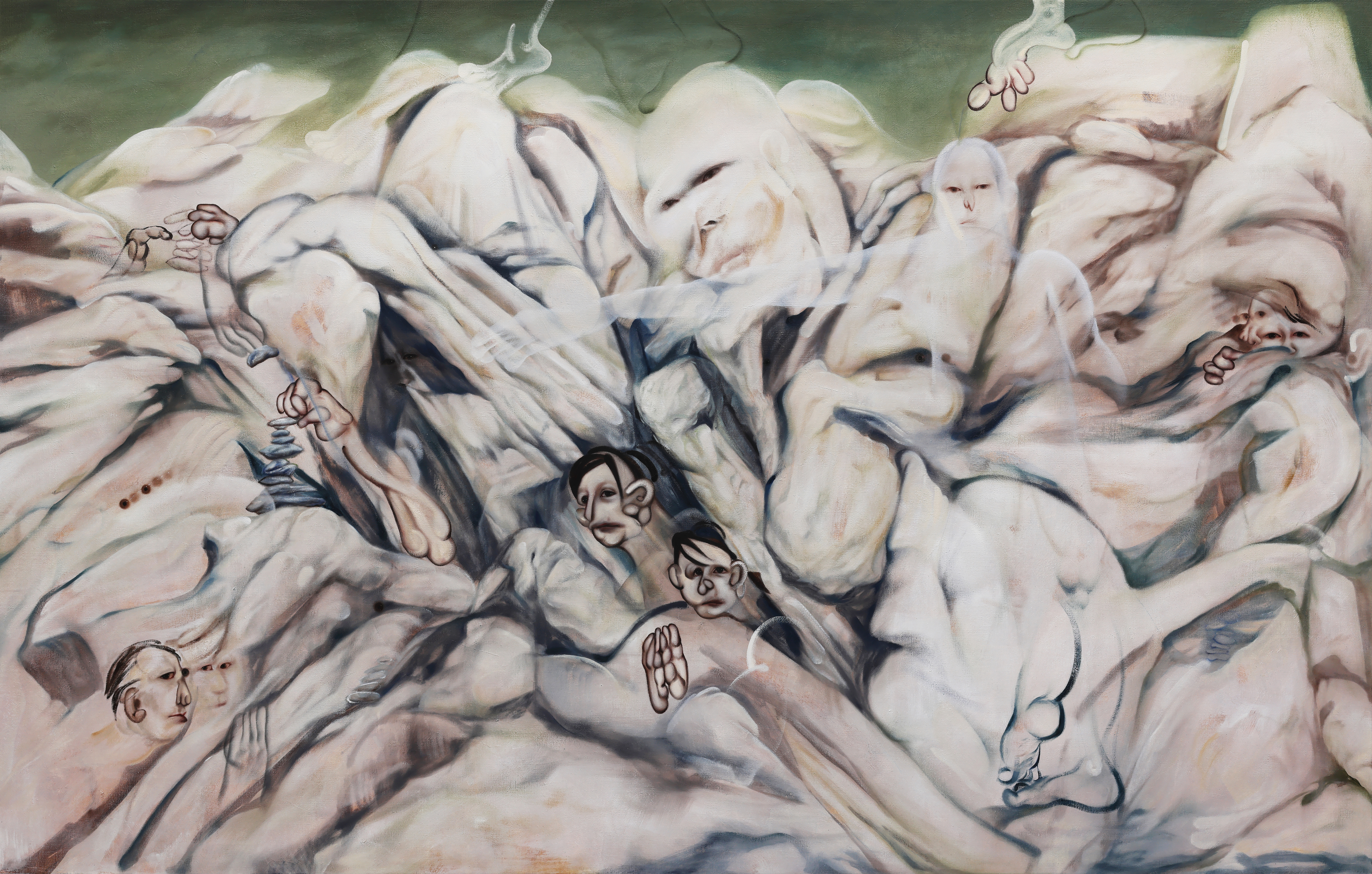
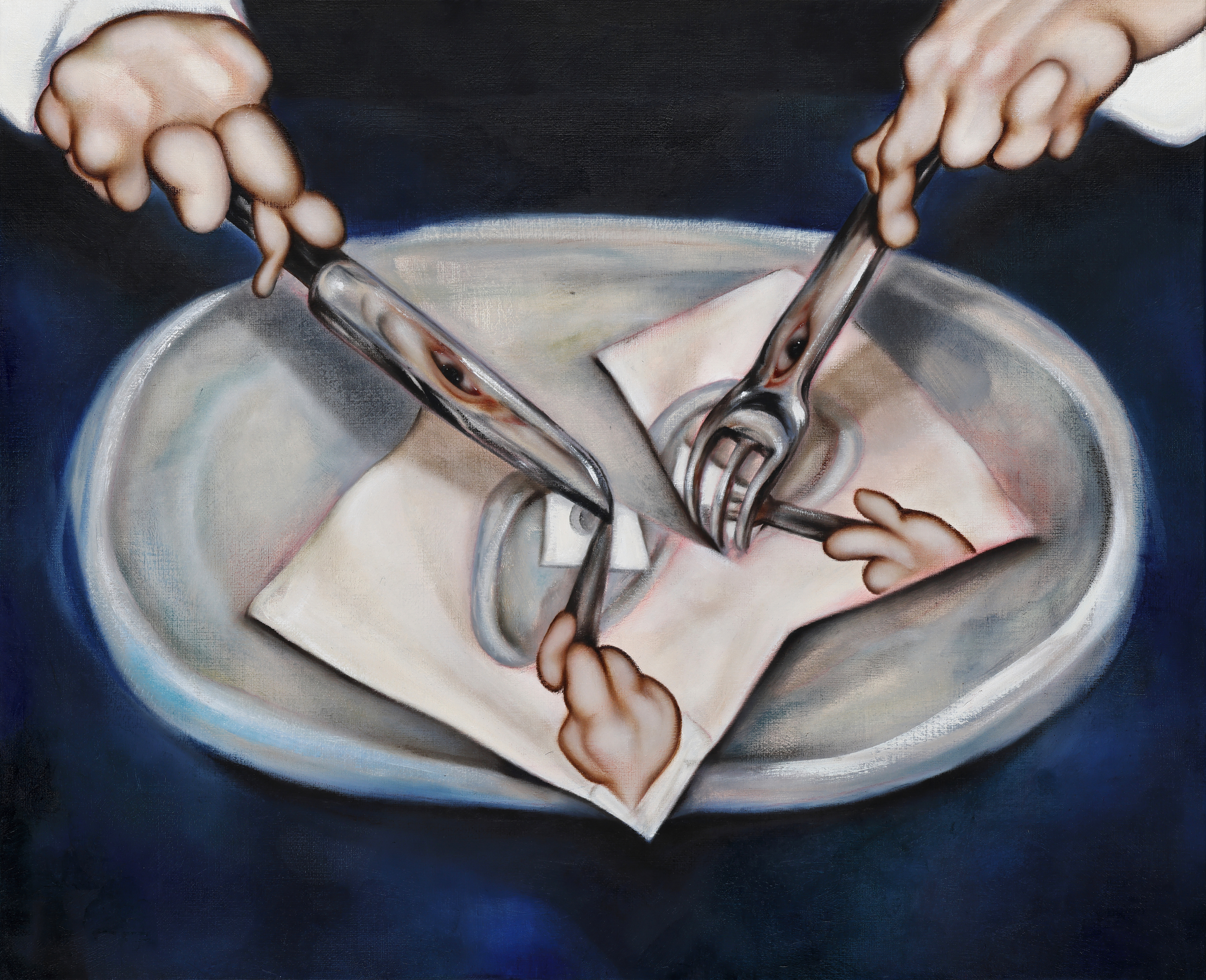
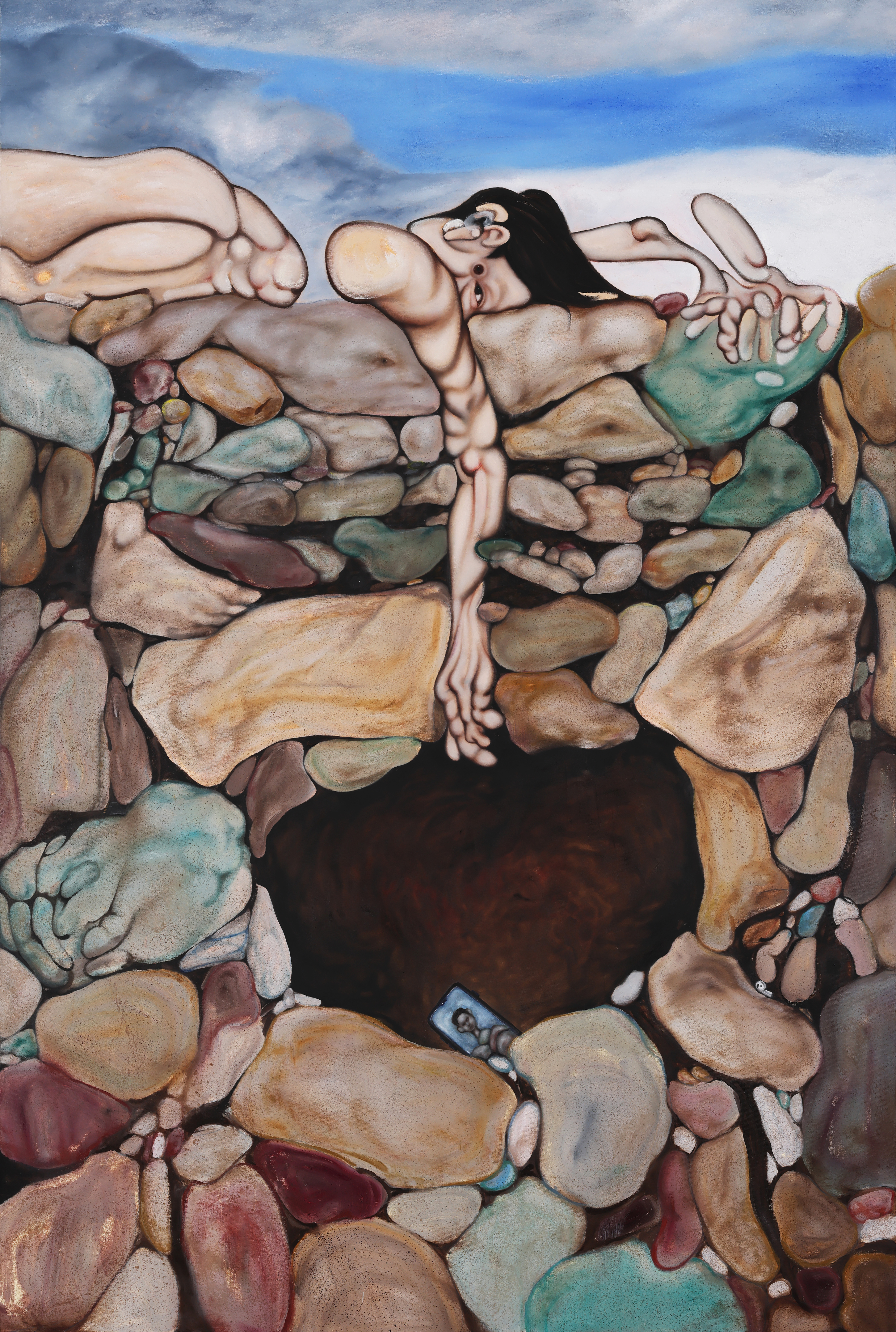
현실을 온전히 감각하기 위해서는 시간을 들여 현상을 해석하는 능동적인 노력이 필요하다. 그러나 입력과 출력이 단선적으로 이루어지는 현대 매체 환경에서 우리의 감각은 갈수록 수동적으로 변한다. 한의도는 이처럼 판단 불가능한 매체의 레이어를 해체하여 화면에 펼쳐 놓는다. 그는 매끈하게 가공된 미디어의 층위를 걷어내고 그 이면의 불완전함을 드러냄으로써, 관객으로 하여금 우리가 무엇을 진실이라 믿고 있는지 자문하게 한다. 예를 들어 <리뷰>라는 작품은 ‘리뷰 이벤트’라는 자본주의적 보상 체계 속에서, 개인의 진실된 향유는 사라지고 오직 ‘과시를 위한 이상적 이미지’를 만드는 데에만 매몰된 현대인의 시각적 소비 세태를 풍자한다. 개인의 기운이(혹은 그것을 표상하는 신체) 관악산 틈새를 비집고 들어가고 나오는 작품 <운석>은 최근 관악산에 가면 운이 트인다는 역술가의 발언을 계기로 시작된 등산 열풍을 시각화한다. 이는 근거 없는 경험담이 축적되어 집단적 현상이다. 작가의 말처럼 이러한 현상은 사실 여부와 무관한 특정 행동을 선택하게 하는 계기이며 불안을 조절하고 미래를 이해하려는 인간의 인식 방식일 것이다. <사랑니>라는 작품에서는 이가 보이는 부분 아래에 깊이 내린 뿌리를 통해 보이는 것과 보이지 않는 것을 암시하며 작가의 위트 있는 시선을 내비친다. 결국 작가는 고정된 실체보다 흩어져 유동적으로 떠다니는 정체성의 파편들이 오히려 우리 삶의 진실에 더 가깝다는 사실을 힘주어 말한다. 그리고 그 정체성은 또 다른 정체성을 서술한다. 나의 시선이 아닌 타인의 시선에 최적화된 자아 말이다.
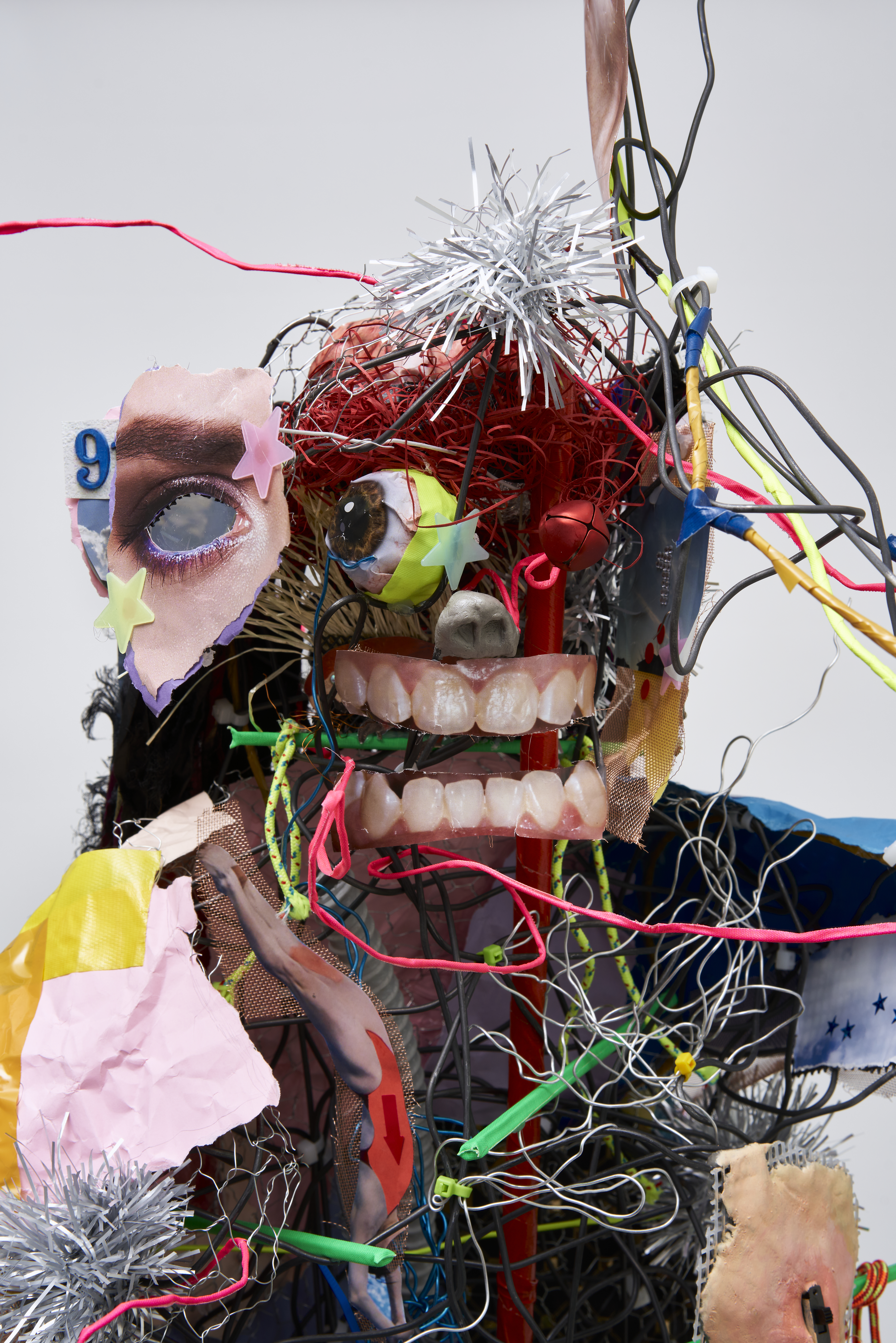
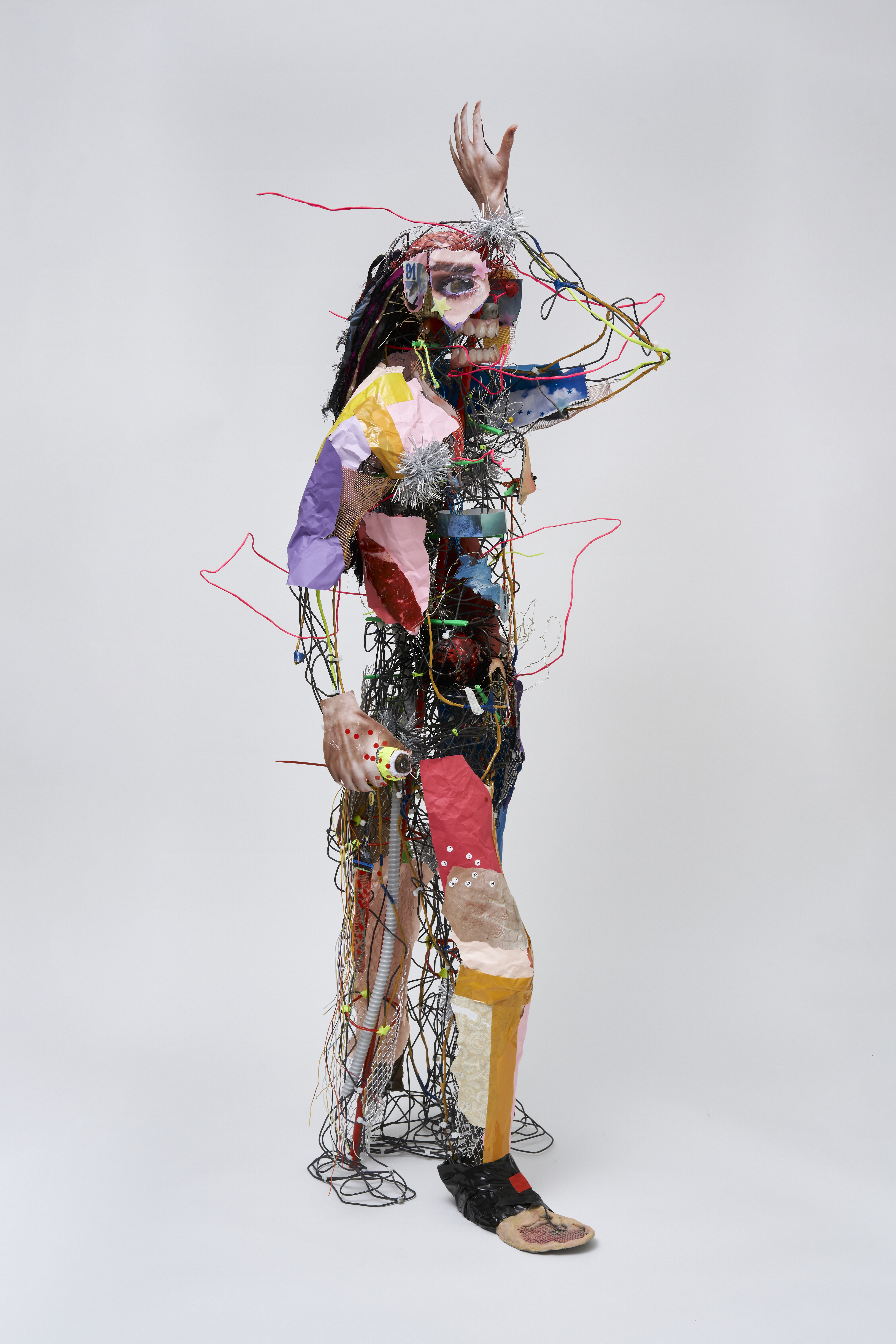
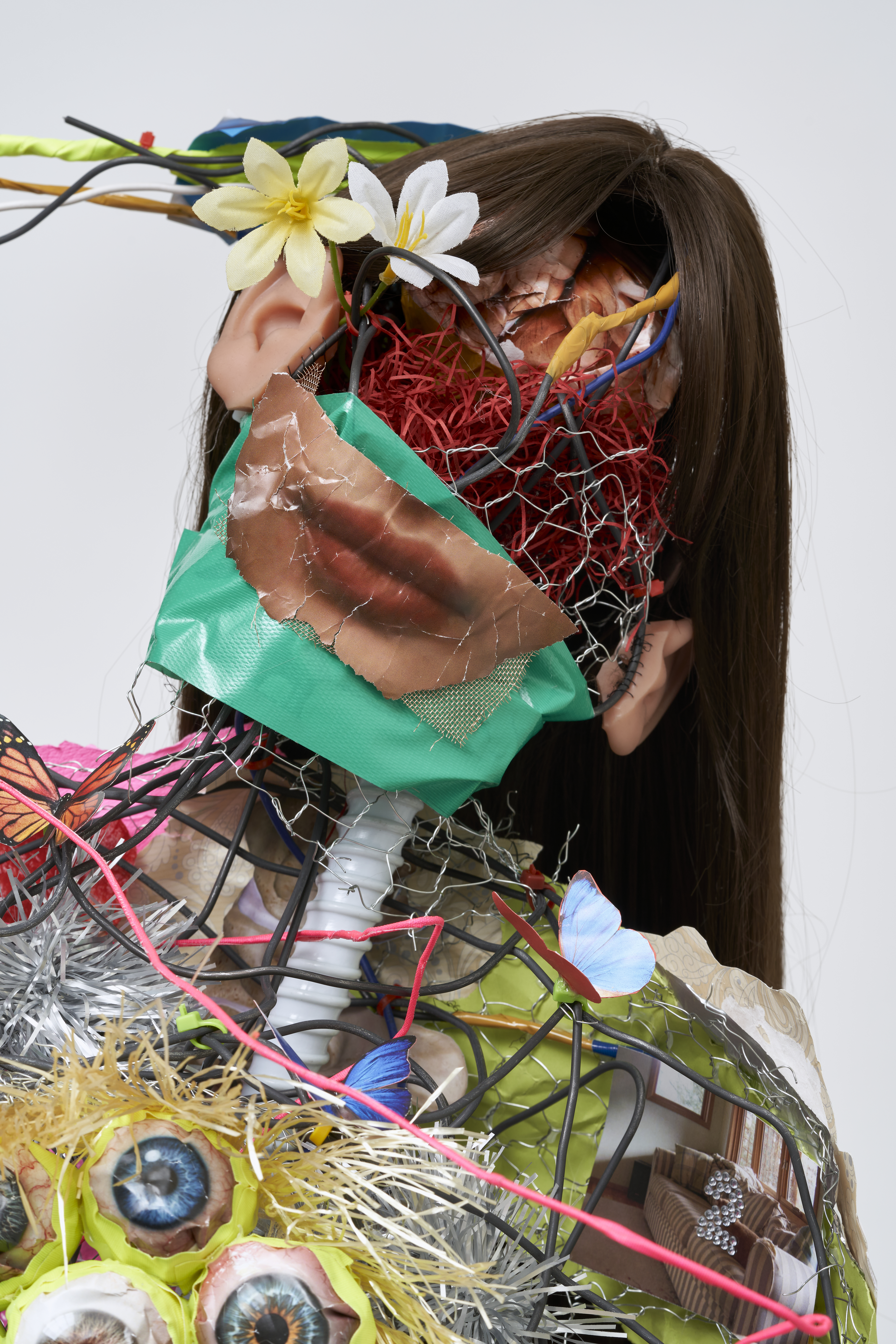
한의도가 시대 정체성의 알 수 없는 좌표들을 평면에 새겨냈다면 곽지수(b.1993)는 자신의 정체성에 대한 내밀함을 조각으로서 시각화한다. 일견 하나의 덩어리처럼 보이는 그의 조각은 중심 뼈대에 무언가를 덧입히는 조소나, 덩어리에서 그것을 깎아내는 소조와는 거리가 멀다. 중심부가 텅 비어버린 그의 조각은 홀로 설 수 없는 것들을 연대를 통해 얽혀 함께 중력에 저항하는 것으로부터 출발한다. 그리고 이 위로 미디어에서 오려낸 익명의 신체 이미지들을 부착한다. 이때 작가는 이미지를 붙이기 전 그것을 물리적으로 움켜쥐고 구겨버리는데, 이 행위는 평면의 데이터를 입체의 물질로 변환시키며 실재를 감각하는 과정이 된다. 이 과정에서 작가는 창조하기 위해 파괴하고 결합하기 위해 분리하는 타나토스(Thanatos)적 면모를 보인다. 잘려 나온 신체의 파편들을 구조 안에 붙여 하나의 몸을 완성하는 일은 분열된 자아를 통합하려는 작가의 시도와 닮아있다. 어릴 적 해외 체류 경험을 통해 타인의 시선 속에서 정체성의 혼란을 겪었던 작가는, 귀국 후에도 지속된 이 갈증이 외부 조건이 아닌 내적이고 세분화된 층위에 있음을 깨달았기 때문이다.
이를 해소하기 위해 작가는 더 이상 원본이 중요해지지 않은 시대에 떠도는 이미지들을 취사선택하여 통제하는 방식을 선택한다. 이러한 맥락에서 곽지수는 이번 신작에 피카소의 〈아비뇽의 처녀들〉을 모티프로 선택했다. 한 화면에 정면, 측면, 위에서 본 모습 등이 동시에 존재하는 다시점(Multiple Viewpoints)을 보이는 이 작품은 인물과 배경의 경계를 무너뜨리고 형상을 날카로운 유리 파편처럼 분절시킨다. 작가는 이러한 형식을 차용하여 형태를 잡고 로마시대 순교자였던 루치아(Lucia) 와 마라(Mara) 등 고통을 겪은 여성들의 이름으로 명명하여, 대상화된 이미지가 아니라 개별적으로 존재하는 주체로 탈바꿈시킨다. 극심한 고통과 상실을 관통한 여성들의 이름을 입은 이 조각들은, 더 이상 타인에 의해 관찰되고 소비되는 대상화된 이미지에 머물지 않는다.
이처럼 곽지수는 파괴와 결합이라는 과정을 통해 정체성의 혼란을 조형적 질서 안에 안착시켰다. 중심이 비어 있기에 오히려 견고하게 서로를 붙드는 이 조각들은 불안정한 시대를 버텨내는 처절하고도 아름다운 연대의 형상이라 하겠다.
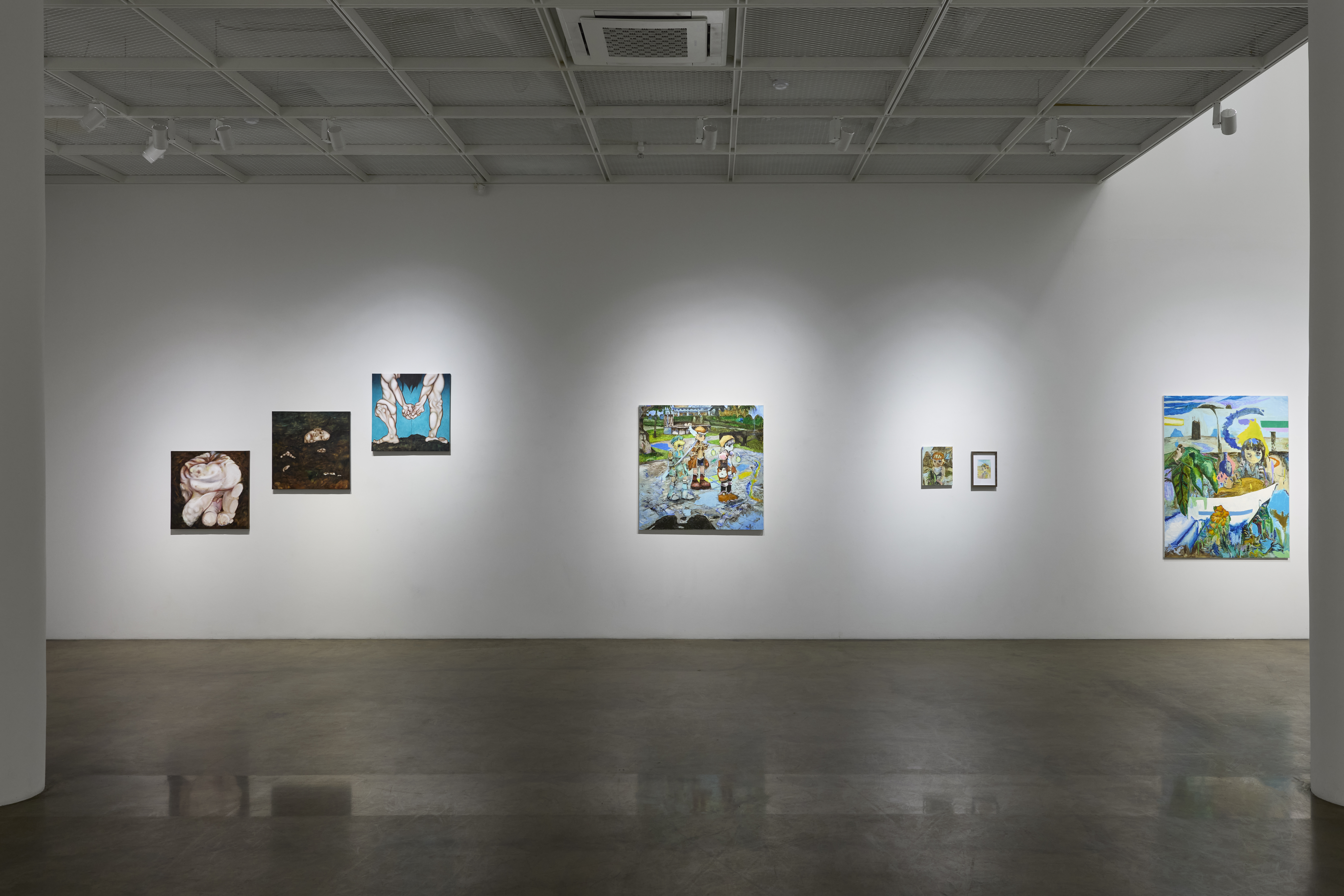
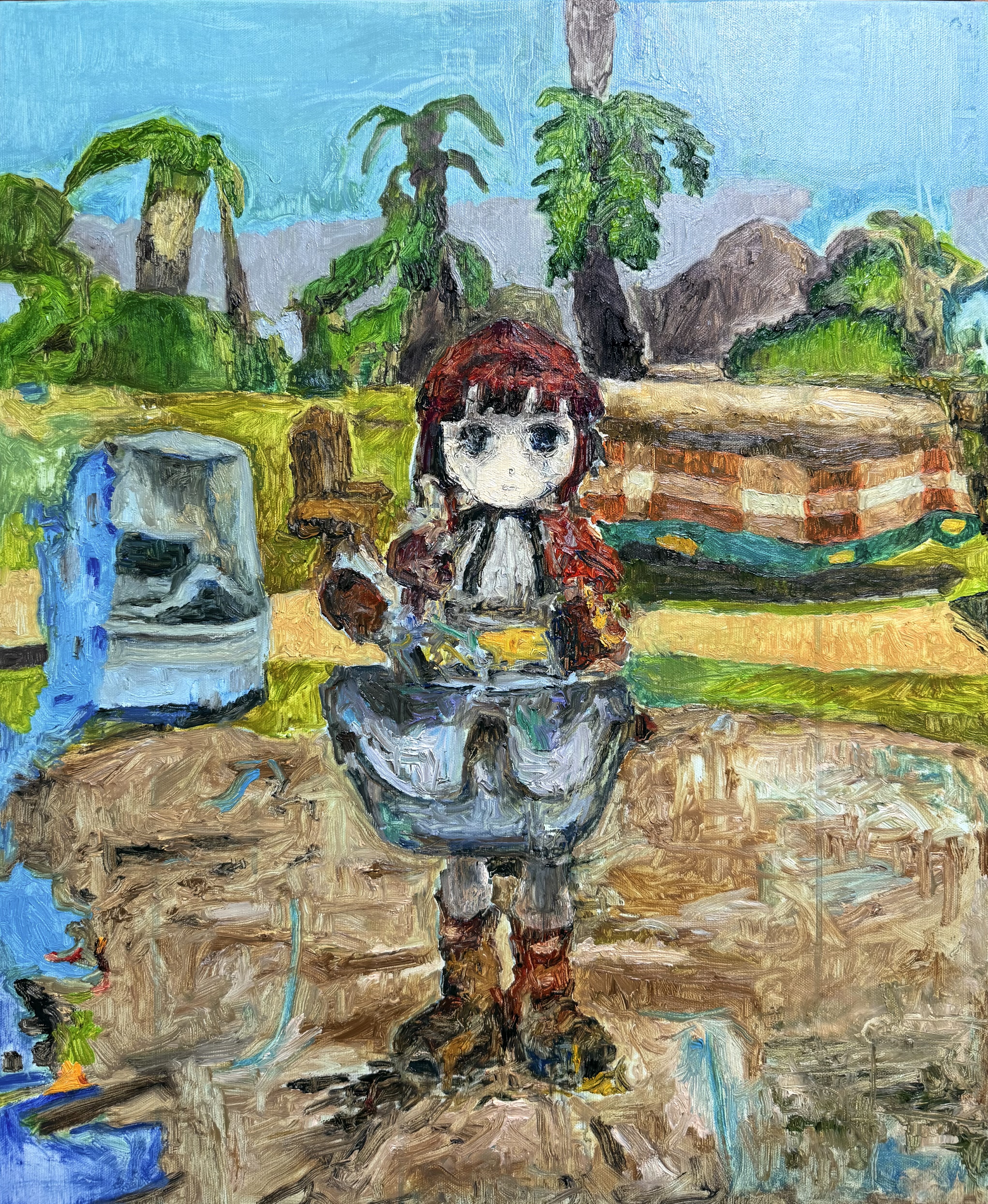
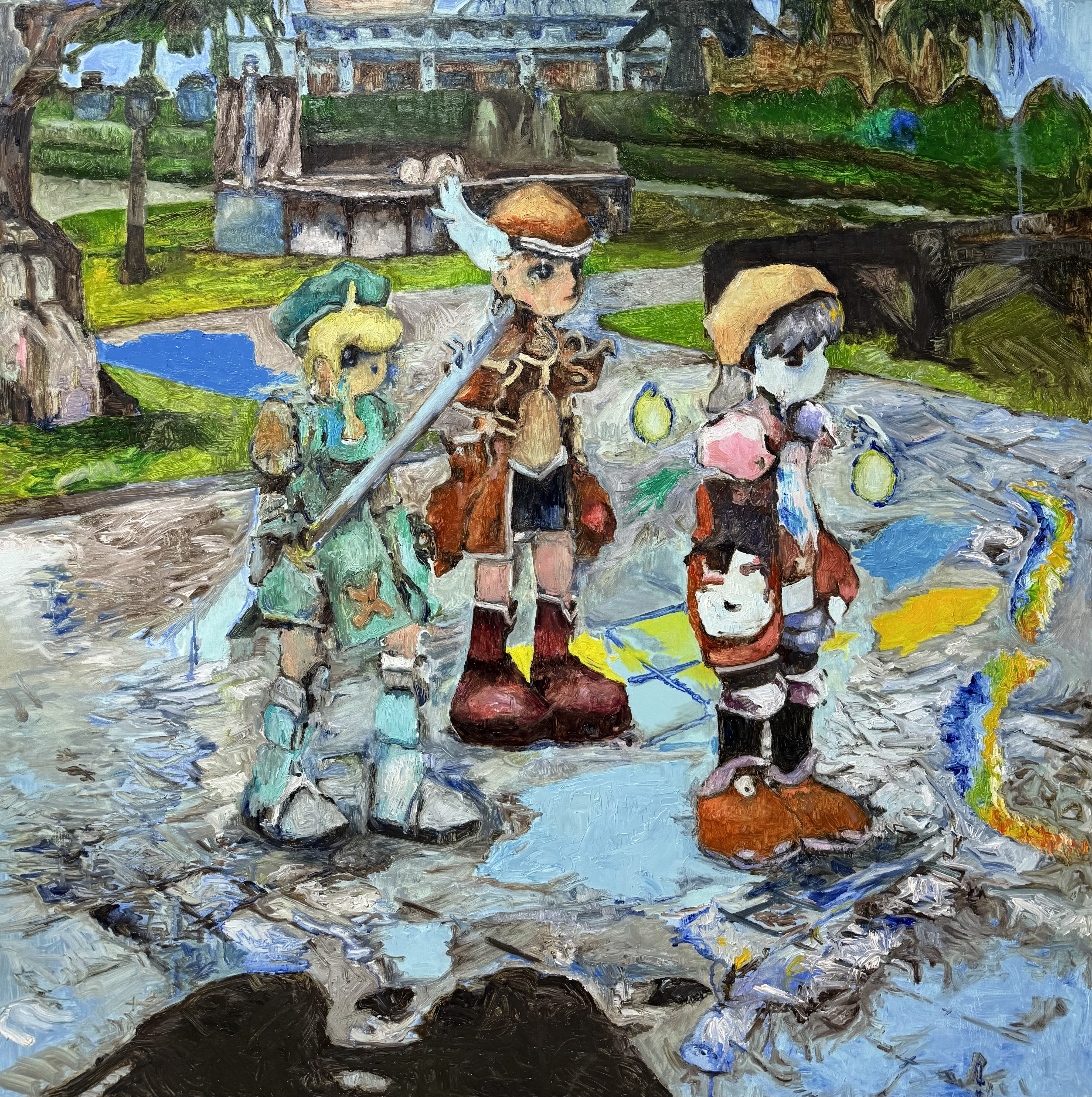
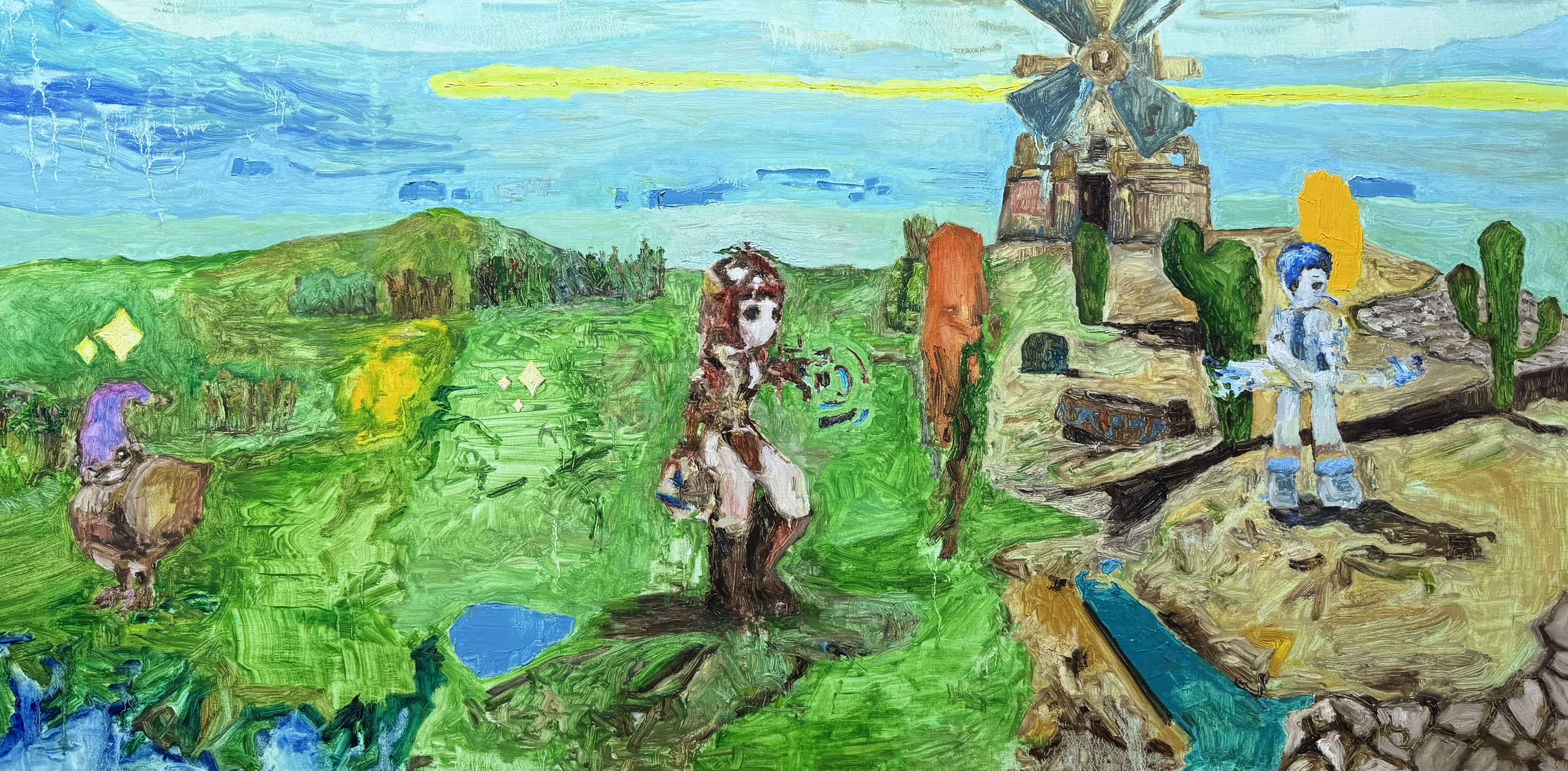
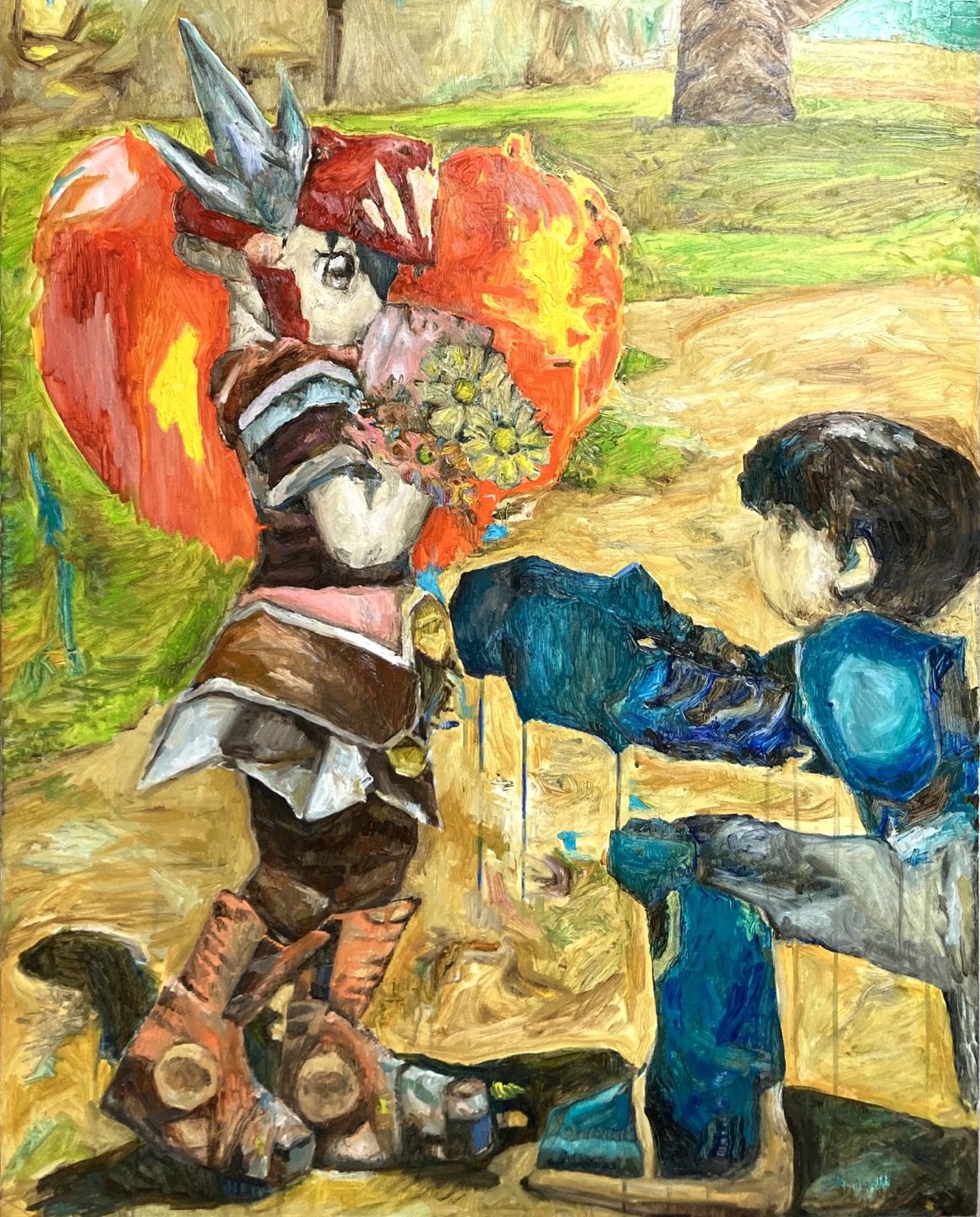
앞선 작가들이 현재의 파편화된 감각과 주체적 재구성을 다루었다면, 권상록(b.1991)은 이토록 가변적인 세계 안에서 형성된 디지털 유적의 감속과 퇴적을 풍경으로 그려낸다. 그는 2000년대 초반 MMORPG가 구축했던 가상 세계의 풍경, 특히 이제는 서비스가 종료되어 더는 접속할 수 없는 ‘샤이닝로어’의 잔상을 화면 위로 소환한다.
한때 수많은 개인이 접속하여 관계를 맺고 존재를 확장했던 이 공간은, 이제 데이터베이스 어딘가에 공허한 기표로 남아 주인을 기다리는 장소가 되었다. 사용자들은 현실의 자아를 유보한 채 영웅이나 조력자, 혹은 탐험가의 페르소나를 입고 이 가상 세계를 현실의 충실한 연장선상으로 향유했다. 작가는 주인의 부재 속에 붕괴해가는 이러한 로우 폴리곤(Low-polygon)의 세계를 ‘주관이 관여하지 못하게 된 세계 속의 풍경’이라 명명하며, 이를 회화적 층위로 복구한다.
그에게 회화는 단순한 재현의 기술이 아니라, 오랜 시간 축적되어 온 시간의 장소이다. 이미지가 즉각적으로 소비되는 디지털 환경의 속도감에 저항하듯, 권상록은 회화적 언어를 통해 이미지를 ‘암호화’한다. 이는 비밀을 숨기기 위함이 아니라, 회화라는 매체가 필연적으로 만들어내는 ‘거리’와 ‘지연’의 상태를 의미한다. 짧고 속도감 있는 붓질과 특유의 색채가 뒤섞여 유동적으로 흘러내리는 화면은 구상과 추상의 경계를 흐리며, 과거의 데이터가 현재의 감각과 교차하는 실재의 상(像)을 제시한다. 이를 통해 관람객은 한때 실재했으나 이제는 작가의 화면에 펼쳐진 가상 세계를 목도하며, 우리가 망각해온 시공간과 그 안에 묻힌 실재의 흔적을 대면하게 된다.
결론적으로 이번 전시는 정체성의 여정이다. 현대 사회에서 우리는 무분별한 디지털 이미지와 타인의 시선 속에 끊임없이 노출되어 있다. 본 전시는 이러한 상황에서 현대인의 정체성이란 고정된 불변의 것이 아니라, 흐르는 강물처럼 끊임없이 재구조화되는 유동적인 것임을 시사한다. 이것은 정체성을 잃어가는 공포가 아니라 자연스러운 현상이며, 그 흩어진 조각들 사이에서 스스로를 끊임없이 발굴하고 조립해 나가야 하는 동시대인의 필연적인 숙명일 것이다.
따라서 전시의 제목이자 영화의 제목이기도 한 '토탈 리콜(Total Recall)'은 중의적인 은유로 작동한다. 그것은 외부의 목적에 의해 기억과 감각이 전면적으로 개조되고 설계되는 ‘전면적 소환’의 과정이기도 하지만, 동시에 망실되거나 오염된 실재를 다시 거두어들이는 ‘온전한 회수’의 과정이기도 하기 때문이다. 설계된 데이터의 기록과 실재하는 감각 사이에서, 우리는 비로소 진정한 ‘나’를 회수할 수 있을까.
매체와 데이터가 실재를 압도하고, 끊임없이 부유하는 이미지들에 의해 자아가 끊임없이 재구조화되는 2026년 현재, 우리 개인은 모두 어느 정도 분열된 정체성을 안고 살아가는 영화 속 주인공의 초상이다. 이에 본 전시는 90년대에 영화적 상상으로 예견했던 2048년의 가상이 현재 어떤 방식으로 우리 곁에 물질화되어 있는지, 각자가 믿어온 정체성이 실은 얼마나 유동적이고 위태로운 이미지의 집합체인지 세 명의 작가가 제시하는 작품을 통해 추적해보고자 한다.
알고리즘과 인공지능을 통한 정보의 가공이 강력하게 영향을 미치는 사회에서는 더이상 내가 느끼는 감정, 기억, 가치관 등이 유기적으로 형성된 총체적 자아가 아니라 접속하는 플랫폼에 따라, 알고리즘이 보여주는 피드에 의해 끊임없이 편향된 정보들이 유입된다. 그리고 그 속을 떠도는 우리는 순간적인 자극과 반응 속에 존재한다. 다시 말해 일체화된 자아라는 것은 다시 모아 붙일 수 없는 ‘신화’가 되었다.
총체성에 대한 그 모든 희망을 접은 오늘날, 한의도(b.2003)는 늘어지고, 뒤틀린 인물의 형상을 통해 파편화된 정체성을 직유한다. 화면 위에서 반복되고 중첩되며 배경과의 경계가 모호해진 형상들은 디지털 사회가 인간에게 가하는 시각적 왜곡의 과정을 노골적으로 드러낸다. 이는 고정된 형태를 유지하지 못하고 부유하며 맥락을 상실한 채 쏟아지는 파편화된 정보와 도파민 중심의 시각 자료들이 우리 내면에 남긴 흔적과 같다.
현실을 온전히 감각하기 위해서는 시간을 들여 현상을 해석하는 능동적인 노력이 필요하다. 그러나 입력과 출력이 단선적으로 이루어지는 현대 매체 환경에서 우리의 감각은 갈수록 수동적으로 변한다. 한의도는 이처럼 판단 불가능한 매체의 레이어를 해체하여 화면에 펼쳐 놓는다. 그는 매끈하게 가공된 미디어의 층위를 걷어내고 그 이면의 불완전함을 드러냄으로써, 관객으로 하여금 우리가 무엇을 진실이라 믿고 있는지 자문하게 한다. 예를 들어 <리뷰>라는 작품은 ‘리뷰 이벤트’라는 자본주의적 보상 체계 속에서, 개인의 진실된 향유는 사라지고 오직 ‘과시를 위한 이상적 이미지’를 만드는 데에만 매몰된 현대인의 시각적 소비 세태를 풍자한다. 개인의 기운이(혹은 그것을 표상하는 신체) 관악산 틈새를 비집고 들어가고 나오는 작품 <운석>은 최근 관악산에 가면 운이 트인다는 역술가의 발언을 계기로 시작된 등산 열풍을 시각화한다. 이는 근거 없는 경험담이 축적되어 집단적 현상이다. 작가의 말처럼 이러한 현상은 사실 여부와 무관한 특정 행동을 선택하게 하는 계기이며 불안을 조절하고 미래를 이해하려는 인간의 인식 방식일 것이다. <사랑니>라는 작품에서는 이가 보이는 부분 아래에 깊이 내린 뿌리를 통해 보이는 것과 보이지 않는 것을 암시하며 작가의 위트 있는 시선을 내비친다. 결국 작가는 고정된 실체보다 흩어져 유동적으로 떠다니는 정체성의 파편들이 오히려 우리 삶의 진실에 더 가깝다는 사실을 힘주어 말한다. 그리고 그 정체성은 또 다른 정체성을 서술한다. 나의 시선이 아닌 타인의 시선에 최적화된 자아 말이다.
한의도가 시대 정체성의 알 수 없는 좌표들을 평면에 새겨냈다면 곽지수(b.1993)는 자신의 정체성에 대한 내밀함을 조각으로서 시각화한다. 일견 하나의 덩어리처럼 보이는 그의 조각은 중심 뼈대에 무언가를 덧입히는 조소나, 덩어리에서 그것을 깎아내는 소조와는 거리가 멀다. 중심부가 텅 비어버린 그의 조각은 홀로 설 수 없는 것들을 연대를 통해 얽혀 함께 중력에 저항하는 것으로부터 출발한다. 그리고 이 위로 미디어에서 오려낸 익명의 신체 이미지들을 부착한다. 이때 작가는 이미지를 붙이기 전 그것을 물리적으로 움켜쥐고 구겨버리는데, 이 행위는 평면의 데이터를 입체의 물질로 변환시키며 실재를 감각하는 과정이 된다. 이 과정에서 작가는 창조하기 위해 파괴하고 결합하기 위해 분리하는 타나토스(Thanatos)적 면모를 보인다. 잘려 나온 신체의 파편들을 구조 안에 붙여 하나의 몸을 완성하는 일은 분열된 자아를 통합하려는 작가의 시도와 닮아있다. 어릴 적 해외 체류 경험을 통해 타인의 시선 속에서 정체성의 혼란을 겪었던 작가는, 귀국 후에도 지속된 이 갈증이 외부 조건이 아닌 내적이고 세분화된 층위에 있음을 깨달았기 때문이다.
이를 해소하기 위해 작가는 더 이상 원본이 중요해지지 않은 시대에 떠도는 이미지들을 취사선택하여 통제하는 방식을 선택한다. 이러한 맥락에서 곽지수는 이번 신작에 피카소의 〈아비뇽의 처녀들〉을 모티프로 선택했다. 한 화면에 정면, 측면, 위에서 본 모습 등이 동시에 존재하는 다시점(Multiple Viewpoints)을 보이는 이 작품은 인물과 배경의 경계를 무너뜨리고 형상을 날카로운 유리 파편처럼 분절시킨다. 작가는 이러한 형식을 차용하여 형태를 잡고 로마시대 순교자였던 루치아(Lucia) 와 마라(Mara) 등 고통을 겪은 여성들의 이름으로 명명하여, 대상화된 이미지가 아니라 개별적으로 존재하는 주체로 탈바꿈시킨다. 극심한 고통과 상실을 관통한 여성들의 이름을 입은 이 조각들은, 더 이상 타인에 의해 관찰되고 소비되는 대상화된 이미지에 머물지 않는다.
이처럼 곽지수는 파괴와 결합이라는 과정을 통해 정체성의 혼란을 조형적 질서 안에 안착시켰다. 중심이 비어 있기에 오히려 견고하게 서로를 붙드는 이 조각들은 불안정한 시대를 버텨내는 처절하고도 아름다운 연대의 형상이라 하겠다.
앞선 작가들이 현재의 파편화된 감각과 주체적 재구성을 다루었다면, 권상록(b.1991)은 이토록 가변적인 세계 안에서 형성된 디지털 유적의 감속과 퇴적을 풍경으로 그려낸다. 그는 2000년대 초반 MMORPG가 구축했던 가상 세계의 풍경, 특히 이제는 서비스가 종료되어 더는 접속할 수 없는 ‘샤이닝로어’의 잔상을 화면 위로 소환한다.
한때 수많은 개인이 접속하여 관계를 맺고 존재를 확장했던 이 공간은, 이제 데이터베이스 어딘가에 공허한 기표로 남아 주인을 기다리는 장소가 되었다. 사용자들은 현실의 자아를 유보한 채 영웅이나 조력자, 혹은 탐험가의 페르소나를 입고 이 가상 세계를 현실의 충실한 연장선상으로 향유했다. 작가는 주인의 부재 속에 붕괴해가는 이러한 로우 폴리곤(Low-polygon)의 세계를 ‘주관이 관여하지 못하게 된 세계 속의 풍경’이라 명명하며, 이를 회화적 층위로 복구한다.
그에게 회화는 단순한 재현의 기술이 아니라, 오랜 시간 축적되어 온 시간의 장소이다. 이미지가 즉각적으로 소비되는 디지털 환경의 속도감에 저항하듯, 권상록은 회화적 언어를 통해 이미지를 ‘암호화’한다. 이는 비밀을 숨기기 위함이 아니라, 회화라는 매체가 필연적으로 만들어내는 ‘거리’와 ‘지연’의 상태를 의미한다. 짧고 속도감 있는 붓질과 특유의 색채가 뒤섞여 유동적으로 흘러내리는 화면은 구상과 추상의 경계를 흐리며, 과거의 데이터가 현재의 감각과 교차하는 실재의 상(像)을 제시한다. 이를 통해 관람객은 한때 실재했으나 이제는 작가의 화면에 펼쳐진 가상 세계를 목도하며, 우리가 망각해온 시공간과 그 안에 묻힌 실재의 흔적을 대면하게 된다.
결론적으로 이번 전시는 정체성의 여정이다. 현대 사회에서 우리는 무분별한 디지털 이미지와 타인의 시선 속에 끊임없이 노출되어 있다. 본 전시는 이러한 상황에서 현대인의 정체성이란 고정된 불변의 것이 아니라, 흐르는 강물처럼 끊임없이 재구조화되는 유동적인 것임을 시사한다. 이것은 정체성을 잃어가는 공포가 아니라 자연스러운 현상이며, 그 흩어진 조각들 사이에서 스스로를 끊임없이 발굴하고 조립해 나가야 하는 동시대인의 필연적인 숙명일 것이다.
따라서 전시의 제목이자 영화의 제목이기도 한 '토탈 리콜(Total Recall)'은 중의적인 은유로 작동한다. 그것은 외부의 목적에 의해 기억과 감각이 전면적으로 개조되고 설계되는 ‘전면적 소환’의 과정이기도 하지만, 동시에 망실되거나 오염된 실재를 다시 거두어들이는 ‘온전한 회수’의 과정이기도 하기 때문이다. 설계된 데이터의 기록과 실재하는 감각 사이에서, 우리는 비로소 진정한 ‘나’를 회수할 수 있을까.
Is my identity a sensation that truly exists, or is it a record of designed data? The film Total Recall explores the chaos of identity experienced by an ordinary protagonist caught between implanted memories and unearthed reality. Faced with the fear that his past might be nothing more than engineered data, the protagonist struggles to find his "true" memory. This cinematic imagination from the 1990s resonates with the identity of modern individuals living in what Zygmunt Bauman termed "Liquid Modernity"—a world where the only unchanging fact is that everything changes.
In 2026, a time when media and data overwhelm reality and the self is constantly restructured by drifting images, we are all portraits of the film’s protagonist, living with fragmented identities. This exhibition seeks to track how the virtuality of 2048, as envisioned by 90s cinema, has materialized around us today, and how the identities we have believed in are actually precarious collections of fluid images, through the works of three artists.
In a society where the processing of information through algorithms and AI exerts a powerful influence, the self is no longer an organically formed totality of emotions, memories, and values. Instead, biased information constantly flows in, dictated by the platforms we access and the feeds shown by algorithms. Drifting within this, we exist amidst instantaneous stimuli and reactions. In other words, the unified self has become a "myth" that can no longer be reassembled—like fragments of an ancient statue waiting for a missing piece that will never appear.
Amidst this loss of hope for totality, Han Ui-do (b. 2003) uses elongated and twisted figures as a direct metaphor for fragmented identity. Her forms, repeated and overlapped on the canvas until their boundaries with the background blur, blatantly reveal the process of visual distortion that digital society inflicts upon humans. These are like the traces left within us by dopamine-centered visual materials and fragmented information that pours out without context, unable to maintain a fixed form.
To fully perceive reality, an active effort to interpret phenomena over time is required. However, in a modern media environment where input and output occur linearly, our senses become increasingly passive. Han Ui-do deconstructs and lays out these undecipherable layers of media on his canvas. By stripping away the smoothly processed layers of media and revealing the incompleteness behind them, he prompts viewers to question what they believe to be the truth.
For instance, the work satirizes the visual consumption habits of modern individuals who, trapped within the capitalist reward system of "review events," lose the capacity for genuine enjoyment and become obsessed with creating "ideal images for display."
The work , which depicts a person’s energy (or the body representing it) squeezing through the crevices of Gwanak Mountain, visualizes the recent hiking craze sparked by a fortuneteller’s claim that visiting the mountain brings good luck. This is a collective phenomenon built on unverified personal anecdotes. As the artist suggests, such phenomena serve as catalysts that drive specific actions regardless of factual truth; they are human modes of perception used to manage anxiety and make sense of the future. In <Wisdom Tooth>, she hints at the seen and the unseen through roots deep beneath the visible part of the tooth, offering a witty perspective. Ultimately, the artist emphasizes that the drifting fragments of identity are closer to the truth of our lives than any fixed entity. And that identity describes yet another identity—a self optimized not for one's own gaze, but for the gaze of others.
While Han Ui-do carves the unknown coordinates of contemporary identity onto a flat surface, Kwak Ji-su (b. 1993) visualizes the intimacy of her own identity through sculpture. Her sculptures, which at first glance appear as a single mass, are far from traditional modeling (adding to a core) or carving (subtracting from a mass). Her sculptures, with their hollow centers, begin by resisting gravity through the solidarity of things that cannot stand alone. Upon this structure, she attaches anonymous body images cut from media. Before attaching them, she physically grasps and crumples the images—a process of transforming flat data into three-dimensional matter and sensing reality. In this process, the artist exhibits a "Thanatos-like" aspect, destroying to create and separating to combine. The act of completing a single body by attaching severed fragments to a structure mirrors the artist's attempt to integrate a fragmented self. Having experienced identity confusion through the eyes of others during her childhood abroad, she realized that this thirst, which persisted after her return, resided not in external conditions but in internal, subdivided layers.
To resolve this, she chooses to "control" drifting images in an era where the original is no longer paramount. In this context, Kwak Ji-su chose Picasso’s <Les Demoiselles d’Avignon> as a motif for her new work. Displaying multiple viewpoints where front, side, and top views exist simultaneously, this work collapses the boundaries between figure and background, breaking the form into sharp, glass-like shards. Borrowing this format, she titles her works after women who endured great suffering, such as the Roman martyr Lucia and Mara, transforming them from objectified images into individually existing subjects. Clad in the names of women who moved through extreme pain and loss, these sculptures no longer remain as objectified images to be observed and consumed by others. Through this process of destruction and combination, Kwak settles the chaos of identity into a formal order. These sculptures, which hold onto each other firmly because they are empty at the center, represent a desperate yet beautiful form of solidarity enduring an unstable era.
While the previous artists dealt with fragmented sensations and subjective reconstruction, Kwon Sang-rok (b. 1991) paints the deceleration and sedimentation of digital ruins formed within this volatile world. He summons the landscapes of the virtual world built by MMORPGs in the early 2000s—specifically the remnants of Shining Lore, a game whose service has ended and can no longer be accessed. This space, where countless individuals once connected and expanded their existence, now remains as a hollow signifier somewhere in a database, waiting for its owner. Users enjoyed this virtual world as a faithful extension of reality, putting their real-world selves on hold to adopt personas of heroes, helpers, or explorers. The artist names this world of low-polygons, collapsing in the absence of its master, as "a landscape in a world where subjectivity can no longer intervene," and restores it through the layers of painting.
For him, painting is not a simple technique of representation, but a place of time accumulated over long periods. As if resisting the speed of the digital environment where images are consumed instantaneously, Kwon "encrypts" images through the language of painting. This is not to hide secrets, but to signify the state of "distance" and "delay" that the medium of painting inevitably creates. The screen, where short, fast brushstrokes and characteristic colors mingle and flow fluidly, blurs the line between figuration and abstraction, presenting an image of reality where past data intersects with present sensations. Through this, viewers witness a virtual world that once truly existed but now unfolds on the artist's canvas, confronting the space-time we have forgotten and the traces of reality buried within it.
In conclusion, this exhibition is a journey of identity. In modern society, we are constantly exposed to indiscriminate digital images and the gaze of others. Total Recall suggests that identity in the modern age is not something fixed and immutable, but a fluid entity that is constantly restructured like a flowing river. This is not a horror of losing one's identity, but a natural phenomenon—the inevitable fate of contemporaries who must constantly excavate and assemble themselves from among scattered pieces.
Thus, the title of the exhibition and the film, "Total Recall," acts as a multi-layered metaphor. It is a process of "Total Recall" in the sense of memory and sensation being entirely remodeled and designed for external purposes, but simultaneously, it is a process of "Total Recovery"—reclaiming the reality that has been lost or contaminated. Between the records of designed data and truly existing sensations, can we finally recover the true "Self"?
In 2026, a time when media and data overwhelm reality and the self is constantly restructured by drifting images, we are all portraits of the film’s protagonist, living with fragmented identities. This exhibition seeks to track how the virtuality of 2048, as envisioned by 90s cinema, has materialized around us today, and how the identities we have believed in are actually precarious collections of fluid images, through the works of three artists.
In a society where the processing of information through algorithms and AI exerts a powerful influence, the self is no longer an organically formed totality of emotions, memories, and values. Instead, biased information constantly flows in, dictated by the platforms we access and the feeds shown by algorithms. Drifting within this, we exist amidst instantaneous stimuli and reactions. In other words, the unified self has become a "myth" that can no longer be reassembled—like fragments of an ancient statue waiting for a missing piece that will never appear.
Amidst this loss of hope for totality, Han Ui-do (b. 2003) uses elongated and twisted figures as a direct metaphor for fragmented identity. Her forms, repeated and overlapped on the canvas until their boundaries with the background blur, blatantly reveal the process of visual distortion that digital society inflicts upon humans. These are like the traces left within us by dopamine-centered visual materials and fragmented information that pours out without context, unable to maintain a fixed form.
To fully perceive reality, an active effort to interpret phenomena over time is required. However, in a modern media environment where input and output occur linearly, our senses become increasingly passive. Han Ui-do deconstructs and lays out these undecipherable layers of media on his canvas. By stripping away the smoothly processed layers of media and revealing the incompleteness behind them, he prompts viewers to question what they believe to be the truth.
For instance, the work satirizes the visual consumption habits of modern individuals who, trapped within the capitalist reward system of "review events," lose the capacity for genuine enjoyment and become obsessed with creating "ideal images for display."
The work , which depicts a person’s energy (or the body representing it) squeezing through the crevices of Gwanak Mountain, visualizes the recent hiking craze sparked by a fortuneteller’s claim that visiting the mountain brings good luck. This is a collective phenomenon built on unverified personal anecdotes. As the artist suggests, such phenomena serve as catalysts that drive specific actions regardless of factual truth; they are human modes of perception used to manage anxiety and make sense of the future. In <Wisdom Tooth>, she hints at the seen and the unseen through roots deep beneath the visible part of the tooth, offering a witty perspective. Ultimately, the artist emphasizes that the drifting fragments of identity are closer to the truth of our lives than any fixed entity. And that identity describes yet another identity—a self optimized not for one's own gaze, but for the gaze of others.
While Han Ui-do carves the unknown coordinates of contemporary identity onto a flat surface, Kwak Ji-su (b. 1993) visualizes the intimacy of her own identity through sculpture. Her sculptures, which at first glance appear as a single mass, are far from traditional modeling (adding to a core) or carving (subtracting from a mass). Her sculptures, with their hollow centers, begin by resisting gravity through the solidarity of things that cannot stand alone. Upon this structure, she attaches anonymous body images cut from media. Before attaching them, she physically grasps and crumples the images—a process of transforming flat data into three-dimensional matter and sensing reality. In this process, the artist exhibits a "Thanatos-like" aspect, destroying to create and separating to combine. The act of completing a single body by attaching severed fragments to a structure mirrors the artist's attempt to integrate a fragmented self. Having experienced identity confusion through the eyes of others during her childhood abroad, she realized that this thirst, which persisted after her return, resided not in external conditions but in internal, subdivided layers.
To resolve this, she chooses to "control" drifting images in an era where the original is no longer paramount. In this context, Kwak Ji-su chose Picasso’s <Les Demoiselles d’Avignon> as a motif for her new work. Displaying multiple viewpoints where front, side, and top views exist simultaneously, this work collapses the boundaries between figure and background, breaking the form into sharp, glass-like shards. Borrowing this format, she titles her works after women who endured great suffering, such as the Roman martyr Lucia and Mara, transforming them from objectified images into individually existing subjects. Clad in the names of women who moved through extreme pain and loss, these sculptures no longer remain as objectified images to be observed and consumed by others. Through this process of destruction and combination, Kwak settles the chaos of identity into a formal order. These sculptures, which hold onto each other firmly because they are empty at the center, represent a desperate yet beautiful form of solidarity enduring an unstable era.
While the previous artists dealt with fragmented sensations and subjective reconstruction, Kwon Sang-rok (b. 1991) paints the deceleration and sedimentation of digital ruins formed within this volatile world. He summons the landscapes of the virtual world built by MMORPGs in the early 2000s—specifically the remnants of Shining Lore, a game whose service has ended and can no longer be accessed. This space, where countless individuals once connected and expanded their existence, now remains as a hollow signifier somewhere in a database, waiting for its owner. Users enjoyed this virtual world as a faithful extension of reality, putting their real-world selves on hold to adopt personas of heroes, helpers, or explorers. The artist names this world of low-polygons, collapsing in the absence of its master, as "a landscape in a world where subjectivity can no longer intervene," and restores it through the layers of painting.
For him, painting is not a simple technique of representation, but a place of time accumulated over long periods. As if resisting the speed of the digital environment where images are consumed instantaneously, Kwon "encrypts" images through the language of painting. This is not to hide secrets, but to signify the state of "distance" and "delay" that the medium of painting inevitably creates. The screen, where short, fast brushstrokes and characteristic colors mingle and flow fluidly, blurs the line between figuration and abstraction, presenting an image of reality where past data intersects with present sensations. Through this, viewers witness a virtual world that once truly existed but now unfolds on the artist's canvas, confronting the space-time we have forgotten and the traces of reality buried within it.
In conclusion, this exhibition is a journey of identity. In modern society, we are constantly exposed to indiscriminate digital images and the gaze of others. Total Recall suggests that identity in the modern age is not something fixed and immutable, but a fluid entity that is constantly restructured like a flowing river. This is not a horror of losing one's identity, but a natural phenomenon—the inevitable fate of contemporaries who must constantly excavate and assemble themselves from among scattered pieces.
Thus, the title of the exhibition and the film, "Total Recall," acts as a multi-layered metaphor. It is a process of "Total Recall" in the sense of memory and sensation being entirely remodeled and designed for external purposes, but simultaneously, it is a process of "Total Recovery"—reclaiming the reality that has been lost or contaminated. Between the records of designed data and truly existing sensations, can we finally recover the true "Self"?